(espn.go.com 4-25-11)
Soccer players are renowned for stretching rules to gain an edge. Now the ball boys are getting in on the act.
Sevilla's 3-2 victory over Villarreal on Sunday was marred by what seems a growing trend in the Spanish league -- extra balls thrown onto the field to stop play.
A video replay clearly showed a ball boy tossing another ball onto the field as Villarreal pushed upfield late in the game. Another ball was heaved onto the field from the seats above Villarreal's goal.
There were similar ploys during Real Madrid's visit to Osasuna in January, and relegation-threatened Zaragoza employed the tactic in a victory over Getafe last month.
The offending clubs were fined a paltry $877.
"Futbol is played with one ball...some people should learn before coming to stadiums and ruining a nice, exciting game," Villarreal striker Giuseppe Rossi wrote on Twitter after the defeat by Sevilla.
Referee Alberto Undiano Mallenco made mention of the extra balls at Sevilla in his match report, which means the Spanish soccer federation's disciplinary committee will have to study it. But it's unlikely to raise the penalty.
"We should look at altering the regulations," federation spokesman Jorge Carretero told The Associated Press on Monday. "The rules need to generate fines that are relative to the penalty. The problem with the current regulations is that they say a higher sanction can only be applied if the penalty is of a violent nature."
Villarreal goalkeeper Diego Lopez even nudged aside a ball boy after he hesitated in handing a new ball to the Spanish goalkeeper, who decided to fetch the ball that had been in play from behind the advertising boards.
"It's something you shouldn't expect to see at the stadium. In those moments when you're losing and they do these types of things you feel ready to act out stupidly, but you have to control yourself," Lopez said.
"What can you do? It's shameful. It's a question of sportsmanship."
Levante goalkeeper Gustavo Munua also experienced similar problems at Atletico Madrid on Sunday. Ball boys wasted time and often let the balls land short when Munua asked for them. Atletico won 4-1.
In January, Madrid lost 1-0 at the Reyno de Navarro Stadium, its league hopes beginning to slip away. Balls were sent onto the field as Madrid attacked, forcing play to stop.
Zaragoza, meanwhile, is desperately looking to avoid being dropped. Its finances are already a mess and relegation would compound a delicate situation.
Last month, Zaragoza was leading Getafe 2-1 with minutes to go when an extra ball rolled onto the field as the opposition attacked. The ball appeared to come from the Zaragoza dugout.
But for all the mounting evidence of shady tactics in clear view, the rulebook still holds sway.
"If it doesn't break the law according to statutes, then the committee can't really do much," Carretero said.
Tuesday, April 26, 2011

Sunday, April 24, 2011
The story of RSL: A once-wretched MLS club is making history
(by Grant Wahl si.com 4-20-11)
In the summer of 2007, a desperate rookie coach dropped everything in the middle of the MLS season and flew to Argentina in search of a future. Real Salt Lake manager Jason Kreis was just 34, his team was in last place and he needed a major talent upgrade. But could he risk everything by signing a midfielder he'd never seen play in person before?
One night in Buenos Aires, Kreis had dinner with Javier Morales, a 27-year-old playmaker who was looking to move after one season in the Spanish second division. For Kreis, the secret of signing players isn't just in their on-field ability, even though Morales had a good highlight DVD, full of ball skills and technique and tactical smarts.
It's also about the secret in their eyes.
"What is most important to me with these guys is meeting them," says Kreis. "All that stuff stands out when you watch a DVD, but you have no idea what kind of person he is. Seeing his DVD was maybe 65 percent, but talking to him and looking in his eyes fills that other 35 percent. It might have been the other way around."
"Javier was a 100 percenter. He sold me."
As the two men spoke that night, they formed a personal connection -- and Kreis made an impression of his own presenting Salt Lake as an enticing destination to a player who had been skeptical.
"The truth was that I didn't know the city, I didn't know the language and when I read about the team they were in last place," says Morales. "But what convinced me to come was Jason. He spoke about being a young coach and his expectations for the team. It interested me, this challenge of joining a team that wasn't very good. And now, four years later, we're a great team."
These days Morales is the best player on a team that has become the class of MLS. In his first two years, Kreis took Salt Lake from league laughingstock to 2009 MLS Cup champion. RSL is 4-0 in the young MLS season, and its 34-game home unbeaten run in all competitions may well be the longest in the world after Ukraine's Shakhtar Donetsk recently ended its 55-game streak. And tonight Salt Lake will seek to make MLS history when it meets Mexican champion Monterrey in the first leg of the CONCACAF Champions League final (10 p.m. ET, FSC, TeleFutura).
If Salt Lake can take down Rayados in the two-leg final, it will become the first MLS team ever to participate in the FIFA Club World Cup, competing against the world's continental champions (including perhaps Barcelona or Manchester United) in Japan this December.
Kreis has built a formidable team in the last four years, never straying from his policy of interviewing each prospective player, from star forward Álvaro Saborío to the team's last pick in the MLS draft. But team owner Dave Checketts has a special place in his memory for Kreis's first recruiting trip, when he signed Morales and forward Fabián Espíndola during those desperate days in '07.
"Morales and Espíndola were two huge pickups," Checketts says. "Jason knew we didn't have the horses to compete. I'd been warned a little bit about [previous coach] John Ellinger not being fond of South or Central American players, but I didn't realize it until Jason came back with these guys. It made a gigantic difference."
The Team is the Star
In some ways, you could argue that Salt Lake's run to the CCL final is already the greatest international accomplishment in the history of U.S. club soccer. NASL teams never bothered to compete in the continental championship, and the two MLS teams that have won CONCACAF club titles -- D.C. United in 1998 and Los Angeles in 2000 -- had to win just a three-round knockout tournament on friendly U.S. soil.
D.C. United's Marco Etcheverry-led team went on to win the Interamerican Cup, defeating South American champion Vasco da Gama over two legs, but that triumph came with caveats too: Vasco waived the right to host the return leg in Brazil (instead holding it in Florida), and the Interamerican Cup had such little gravitas that it hasn't been contested since.
Salt Lake, meanwhile, had to play 10 games to reach the final, including five difficult road matches against teams like Mexico's Cruz Azul and Costa Rica's Saprissa. Since 2008, the CONCACAF club championship has been organized more like the UEFA Champions League, with a true group stage and two-legged elimination rounds with games played home and away. (Unlike its UEFA counterpart, the CCL plays its final over two legs, not in a netural-venue single game.)
The new format gives the CCL winner more credibility, but the added games also require quality depth, which is rare in MLS. That's not the case with Salt Lake, which is so deep that its second-stringers won convincingly on the road against New England's first-choice team on April 9. "In every game we have a solid guy in every position, and usually it's solid veterans," says midfielder Ned Grabavoy. "But they've also done a good job picking young players and bringing them along at the right pace. I think depth is a huge reason we've gone so far in this tournament with all these extra games during the season."
Kreis's motto is simple: The Team Is The Star. Salt Lake's roster isn't top heavy with a couple of overpaid players. Instead it uses the successful e pluribus unum formula that made Houston and New England so successful in MLS during the mid-2000s. "I don't think every professional athlete in the world could buy into our philosophy as a club," Kreis says. "Professional sports lead to big egos. We don't have room or time for that."
Kreis and general manager Garth Lagerwey have kept together the core players of Salt Lake's rise, a mix of nationalities and talents that has found uncommon chemistry. Midfielder Kyle Beckerman, the deadlocked captain, is the team's hard-tackling heart and soul. Morales is the skillful creative hub, as well as a deadly threat on free kicks. Goalkeeper Nick Rimando keeps the mood light in the locker room and plays beyond his 5-foot-10 height between the pipes.
Center backs Nat Borchers and Jámison Olave are a towering presence on the back line, and the targets up top are Espíndola and Saborío, a pair of coldblooded veteran finishers.
Because this is MLS, Salt Lake has had to make some hard salary-cap decisions. RSL lost its top goal-scorers from 2008 (Robbie Findley) and '09 (Yura Movsisyan), a pair of young forwards who rode their success to Europe. But their replacements have excelled. Saborío, a 29-year-old Costa Rican, scored 18 goals in all competitions last season, while Paulo Jr. has found the net five times in limited duty.
"We've tried to do advance planning when we've understood guys' intentions [to leave]," says Lagerwey, a former MLS player, lawyer, TV commentator and SI.com columnist who joined his old Duke roommate Kreis in Salt Lake. "We worked hard to keep this core and rewarded guys with contracts."
As a result, several players are locked up through the end of 2012 (Morales, Olave, Paulo, Espíndola), 2013 (Beckerman, Rimando) and 2014 (Saborío, Borchers, midfielder Will Johnson). There's a definite window of opportunity.
Still, signing Saborío during the past offseason presented a potential threat to the notion of the team being the star. Salt Lake had to purchase his contract from the Swiss club Sion, which meant Saborío became RSL's first Designated Player, the tag MLS gives to star players whose wages aren't limited by the league's salary cap.
Concerned about the possible fallout, Lagerwey let the players know that Saborío's DP status was due to the transfer fee paid to acquire him (around $700,000) and not to his salary, which isn't the highest on the team. (Morales, who made $252,500 last year according to the MLS Players Union, is the top wage-earner.) "A lot of [MLS] teams bring in Designated Players that are no better than their current players," says Lagerwey. "It reduces the weight of expectations if you let everyone know that Sabo's not our highest-paid player."
The players say they're aware of the situation and appreciate the front office's candor. "What's good is [Saborío] buys into that," says Rimando. "He has this title of the DP, and he plays like one, but he's not like one in the locker room. He's one of the guys, and he wants to be, which is good."
By keeping its players together, Salt Lake has been able to fine-tune a style that combines Latino, North American and (thanks to Jamaican Andy Williams) Caribbean influences. The result is entertaining soccer that wins games.
"We have a style that I would call mixed between American and Latin, a new style," says Morales. "We work very hard in the American way, and we have a Latin game where we try to take care of the ball. It's not just the Latinos, either. This team has an idea of playing that's perhaps different from other [MLS] teams and more entertaining."
Nor is it a coincidence that Salt Lake's Spanish-speaking players have mixed with their English-speaking teammates far more than is usually common on soccer teams. Kreis says that when he played in Dallas there was a distinct divide between the Spanish and English speakers, but that's not the case with RSL, which asks its players to learn English to help foster a long-term commitment.
The effort matters. Morales and Olave, among others, have learned English from scratch. Players from nine different countries have connected. "I've been over for empanadas at Fabián Espíndola's house," says Johnson, a Canadian. Such is Morales' investment in the team that he approached Lagerwey last year and asked what he could to do to help Saborío's adjustment to Salt Lake City.
Saborío recalls Morales' gesture fondly. "He was one of the first people to help me look for a house and find a car dealership," Saborío says. "I was very thankful." After his first season on loan in Salt Lake, Saborío wanted to stay.
"Javier's kind of that bridge" between cultures, says Beckerman. "And the team is the star. We do buy into that, but it's not all true. Javier and Saborío, these guys are stars, but they're buying into it. That's what really helps it go."
"The locker room has some great personalities, but nobody has the mentality that they're bigger than the team," says defender Chris Wingert. "In soccer that's as important as any sport because there's more guys. If you're playing basketball you can have the ball every time down the court. If you're the best player in the league, your team is going to be pretty successful. That's not the case in soccer, especially not in our league."
You can't spell Kreis without R-I-S-K
To hear Dave Checketts tell the story, his fellow owners and MLS commissioner Don Garber thought the Real Salt Lake owner had lost his mind. In 2007, Checketts called Garber and told him he had decided to move the 34-year-old Kreis straight from the playing field into RSL's head coaching position.
"You did what?" Garber replied.
"I think he has every possible characteristic of a great head coach," Checketts said.
"Dave, we have a whole list of people you could interview for that job."
"I know. This is the guy I want."
Checketts, who had run the NBA's Utah Jazz and New York Knicks, didn't want any of what he called the "recycled" coaches who so often stomp the sidelines in the NBA and MLS. Soon after Kreis had joined RSL from Dallas, a plan was set in which Kreis would play through 2007 or '08, become Ellinger's assistant and move to head coach after a couple years (with Ellinger becoming the GM). But Salt Lake's miserable start in '07 caused Checketts to clean house that May, firing Ellinger and GM Steve Pastorino.
Kreis took over immediately.
"I have been around professional sports long enough to know that great coaches have certain characteristics," says Checketts. "Most are guys who were overachievers. Jason was a star in MLS, but I had watched him play for us. He'd play any position he was ever asked. He had always shown up in phenomenal shape and was an extra hard worker. And he had a will to win and never give up."
Kreis showed a clear eye for making smart acquisitions, even if they were personally excruciating. In June '07, a month after taking over, he traded his best friend, Chris Klein, to Los Angeles for a package that included Findley, who would lead the team in goals in '07 and '08. The next month Kreis acquired Beckerman from Colorado in a trade for Mehdi Ballouchy. "The move to bring in Kyle was the linchpin," says Andy Williams, who has been with the team since its expansion year in '05.
Fullback Chris Wingert came via trade from Colorado that July, and the following month Morales, Espíndola and Movsisyan arrived. The 2008 season brought the acquisitions of Olave, Borchers, Johnson and fullback Robbie Russell.
"Jason made the right choices on the players that he got," says Rimando, who joined RSL before the '07 season. "We don't have the South Americans that don't defend. We have South Americans that defend, want to get back and buy into the whole team concept. That's where it starts."
Checketts made a second risky hire in September 2007, passing over another list of recycled candidates and naming Lagerwey Salt Lake's general manager. Lagerwey and Kreis had known each other for 20 years, played together at Duke and with Dallas and felt comfortable working together. "We trust each other," Lagerwey says. "That allows us to disagree and even argue at times and still reach a consensus [on players] that's pretty thoroughly vetted by two guys looking at it from different angles."
Former assistant coach Robin Fraser left to coach Chivas USA during the offseason, but Salt Lake remains the only MLS staff comprised entirely of former players from the league. These days that includes Kreis, Lagerwey and assistant coaches Jeff Cassar, Miles Joseph and C.J. Brown.
"If you're going to run a bakery you should hire bakers, and if you're going to run a soccer team you should hire soccer players," says Lagerwey. "With everything we do we think: 'One of the five of us has been in this position. What did we do? How did we like it when our coach or GM said this or that to us?' By thinking through how every decision affects our players and our team before we make them, we've tried to be respectful of how we treat our players."
A former MLS MVP who scored 108 league goals in 12 seasons, Kreis likes to scour Amazon for foreign books on soccer coaches -- he has read two biographies of José Mourinho --a nd he freely admits to being "obsessive" about preparation. "Anything I do I want to be the best at," Kreis says. "I don't do things to just have fun, whether it's golf or mountain-biking. I attack things. When I played it was the same thing, and now as a coach it's the same."
To say that Kreis is single-minded about soccer might be an understatement. "I don't think he watches other sports," says Beckerman. "He just met [BYU basketball star] Jimmer Fredette the other day, and he didn't know who he was. All the rest of the guys are like, 'Jimmer!'"
But that doesn't mean Kreis is a robot or a drill sergeant. Most of the interviews for this story were conducted on the Thursday after RSL's semifinal advancement in Champions League, when he decided to give his starters a much-needed day off from training in New England. "He's a players' coach," says Borchers. "He comes to us for advice, asks us our opinion on certain things. There's never the sense that he's a tyrant. It's more of a democracy. We appreciate that respect, and it's a two-way street."
Naturally, Kreis' early success in his first four years of coaching have led to expectations that he'll be a top candidate to coach the U.S. national team someday. Yet he's a bit sensitive about the topic after receiving some static within the coaching community last year for speaking about those ambitions.
"If you ask any young MLS coach, I'd be shocked if any of them said they didn't want to be the national team coach," Kreis says, "so to me it's completely reasonable. What I thought came off a little incorrectly in some of that was that it was portrayed that I wanted to be the national team coach now, which isn't the case. I know I've got a lot of learning to do."
Perhaps, but the prospect is enticing: A young American coach who wins trophies and wants to play an entertaining style. Joseph, Kreis's assistant, maintains that Kreis wants U.S. soccer to be the best in the world, and the only way to do that is by bringing a winning brand of stylish soccer to MLS.
"I played for Bruce Arena, Carlos Queiroz, Carlos Alberto Parreira, Bora Milutinovic and Bob Bradley, and those guys are unbelievable coaches," says Joseph. "Jason's approach is just as good as what those guys are doing, and you can see it in the players and the way they respond to him. When he talks, these players react to it. You can see it in training and in games."
Kreis recently signed a new contract with Salt Lake, and Checketts says he doesn't see his coach leaving for another MLS job. But the owner allows that the U.S. national team job is different. "At some point he will be a candidate for the national team," Checketts says, "and I won't hold him back if that opportunity presents itself, because he's becoming a very, very good coach."
So thankful is Checketts that he has decided to retire Kreis' No. 9 in a ceremony on July 4th before one of Salt Lake's two scheduled games this season on ESPN2. (The relative lack of RSL games on national TV this season is worth an entire other story.) Checketts says he made the decision after an RSL player requested to wear No. 9 this season, and the owner refused.
"I know this is traditionally not something that is done in this sport, but I don't care," says Checketts, who points out that he retired the numbers of Patrick Ewing and Dick McGuire during his days with the Knicks. "This is based on his whole body of work. He's the first player we ever signed. He broke the all-time scoring record in our uniform. He gave us credibility when we were a team that had none. No one is going to wear No. 9 again for our club."
Permission to dream.
When Real Salt Lake kicks off against Monterrey tonight, it will be representing an entire league in a final on the international stage. The team has already accomplished a notable set of firsts: first MLS team to win its CCL group, first MLS team to reach the CCL final. Tonight it could become the first MLS team to win a competitive game against a Mexican team in Mexico after 22 matches without a victory (0-20-2).
Of course, Salt Lake doesn't need to win tonight to become the first MLS team to win the CCL and participate in the FIFA Club World Cup. But RSL has been given every chance to create the right conditions to do so. MLS gave every team that reached the CCL group stage an extra $100,000 in allocation money to alleviate player costs, and the league switched around its schedule so that Salt Lake doesn't have to play a game against Philadelphia this weekend before Wednesday's CCL return leg in Utah. What's more, RSL's ownership coughed up around $200,000 for charter flights to Costa Rica for the CCL semifinal and to Mexico for the final.
"There are no moral victories at this point," says Lagerwey. "We got to the final. Now we've got to win it."
The Salt Lake players readily admit they have allowed themselves to contemplate the history they could make this year. "Looking at the season, there are four trophies we could win," says Beckerman. "In the back of our heads, we know this could be a special season."
Those visions include walking out onto the field in Japan this December next to Barcelona at the Club World Cup. When you're an MLS club, you don't get many cracks at the world's most beloved soccer team in a competitive game. Morales says the topic came up during a recent dinner he shared with Olave. "We spoke of how important it would be to achieve a title of this magnitude," says Morales. "The truth is we permitted ourselves to dream a little. But we know we have a great rival in front of us, and the final will be difficult."
Monterrey is the odds-on favorite, even though it has been going through a rough stretch in the Mexican league season. Rayados' salary budget dwarfs Salt Lake's, and it will have the most decorated player on the field in Chilean forward Humberto (El Chupete) Suazo. "He's a great player who's played in Europe and with the Chilean national team," says Olave, "but I think we can control him if we're focused."
"The Mexican teams are so technically gifted, so quick," says Borchers. "They have such a high soccer IQ when you play against them. As a center back I'm seeing situations develop that I wouldn't normally see in MLS. It's a lot more difficult to defend those teams. They don't come at you directly, and they wear you down with possession. There's so many different ways they can score against you."
But Salt Lake has its own scoring options. Saborío, for one, has succeeded at this level before, winning the CONCACAF Champions Cup with Saprissa in 2005 and scoring two goals in its third-place performance at the '05 FIFA Club World Cup. The Salt Lake players note that they were the heavy underdogs in the '09 MLS Cup final against Los Angeles, and look how that turned out.
"You'd like to think you'd get back here every year, but the reality is it could potentially be a once-in-a-career opportunity," says Johnson. "It's a rare chance to achieve something with a group you're so close with. We all want this for each other, and we want to represent Salt Lake and MLS on a global level."
Salt Lake's chance is here. Glory is 180 minutes away.
Thursday, April 21, 2011
Jason Kreis said he desperately wanted to become the first MLS team to win in Mexico


(RSL was damn lucky Humberto Suazo didn't score his second goal of the night. That would have put the game 3-1 for Monterrey and would have sucked the life out of an already lifeless RSL.)

(by James Edwards desnews.com 4-21-11)
Jason Kreis said he desperately wanted to become the first MLS team to win in Mexico.
A tie never felt as good as it did on Wednesday night, though.
Having been thoroughly outplayed the entire second half, and with Monterrey closing in on a third goal, Javier Morales scored a stunning goal in the 89th minute to lift the visitors to an improbable 2-2 draw in front of a sold-out Estadio Tecnologico in the first leg of the CONCACAF Champions League final.
MLS teams are still 0-for-25 in Mexico, but that's just fine with Kreis.
"I think it's the best draw of my life, no doubt about it. I'm really, really proud of what the guys put into that, and I know it wasn't easy at all. It was difficult circumstances for us," said Kreis.
RSL now returns home for the second leg at Rio Tinto Stadium next Wednesday night. With its two road goals in Mexico, a victory, a 0-0 tie or a 1-1 tie will be good enough for Real Salt Lake to clinch the continental title in its home stadium.
Morales said there's nothing to celebrate yet.
"It's very good, but it means nothing 'cause we have to go home and we have to try and win the game," said Morales.
Until his late goal, it appeared Real Salt Lake would be coming home down 2-1 on aggregate.
He changed all that with a fantastic bit of individual skill after receiving a ball in the box from Arturo Alvarez. He thought about taking a quick shot, but with a defender closing quickly he cut it back on the right side of the penalty area and fired a driven shot just inside the far post.
"He takes that touch right, and I said 'goal.' He's done that so many times to us in training," said Nat Borchers.
What was a great finish was actually a nightmare start for RSL.
It took Monterrey just 18 minutes to breakdown RSL's defense with an easy goal, as Aldo De Nigris buried an open netter after a failed clearance in the box.
Conceding early wasn't necessarily a surprise.
In all but one of RSL's six Champions League road games, it conceded the first goal. To its credit, it battled back in those five games for a 1-2-2 record.
Five minutes after going down, RSL striker Alvaro Saborio missed a glorious opportunity in the box after a great build-up with Fabian Espindola. His point-blank shot from about 12 yards out was drilled right at keeper Jonathan Orozco.
The missed opportunity seemed to settle the players, and they were rewarded for their patience.
Real Salt Lake pulled a goal back in the 36th minute on a Borchers' backwards header in traffic. Borchers was in the box because of a corner kick, but Monterrey didn't clear the ball out of harm's way enough, and Will Johnson sent it back into a dangerous area, where Borchers was waiting.
"Really happy with the way we responded both times after going a goal down. Now we have our work cut out for us at home," said Borchers.
It was just the fourth home goal allowed by Monterrey in the Champions League.
The Rayados (striped ones) looked shaky the rest of the first half, but settled down and really dominated the second half.
In the 60th minute, Jamison Olave went from goat to hero in a matter of seconds.
First, he was fantastic making a lunging block on a shot by Neri Cardozo. The heroics were short-lived, though, as he whiffed on a clearance, with the ball popping up and hitting his arm. The El Salvadoran ref didn't hesitate pointing to the spot for a penalty.
Humberto Suazo, who was denied in the first half on a pair of acrobatic saves by Nick Rimando, confidently buried the penalty kick to put Monterrey back in front 2-1.
With the lead, and RSL noticeably tiring, Monterrey continued to throw bodies into the attack for a third goal. Kreis said at one point he saw both outside backs pushing forward.
RSL didn't handle things tactically as well as Kreis would've liked, and will address it for the second leg.
"There's one thing tactically that we're going to have to need to spend quite a bit of time on this week, so we're a bit more prepared and we won't have to look at so many attacks coming at us," said Kreis.
Borchers was pleased with how well the team did absorbing the pressure.
"They just committed a lot of numbers to the attack. I thought we did brilliantly to fend them off. I thought guys were in good spots," he said.
Suazo had a golden opportunity to push the lead to 3-1 in the 85th minute with a one-on-one opportunity in the box, but his chipped shot over Rimando went about five feet to the right.
After the draw, just the fourth by an MLS team in Mexico, Kreis echoed the sentiment of Morales, saying nothing will come easy in the second leg.
"I would think they're going to come to us with a extremely aggressive mentality knowing they have to win," he said.


Schmid knows what RSL are going through in CCL

(by Andrew Winner mlsnet.com 4-19-11)
Seattle Sounders head coach Sigi Schmid has unique perspective on the CONCACAF Champions League, both in the recent and not-so-recent past.
As the head coach of the LA Galaxy, Schmid was the last MLS coach to win the CONCACAF trophy 11 years ago. Now in charge of Seattle, he's also the last MLS coach to face off against Real Salt Lake's opponents in this year's finals.
On the eve of RSL’s away match against Monterrey on Wednesday, Schmid took a moment to reflect on the tournament.
“The competition in 2000 was much different because it was a tournament where all the teams came to one location,” Schmid recalled of his 2000 title, when the tournament was called the CONCACAF Champions' Cup and was played over six days in January in the Los Angeles area. “You played your group games, then you advanced out of the group. It wasn’t the home-and-away competition it is now.”
Complicating matters for the Galaxy were a handful of injuries. Schmid recalled entering the tournament, which required three matches in six days, with problems along the back line and no healthy forwards. In particular, youngster Danny Califf came down with an injury and could not play, while recent signing Alexi Lalas was not fit for game action.
The problems along the front line were more urgent, requiring a creative solution from Schmid.
“We actually took a kid named Adam Frye, who had played forward for me when he was a freshman at UCLA and hadn’t played forward since, had played as a defender for five years, we played him as a center forward,” Schmid said.
After advancing via penalty shootouts in the team’s first two games, current Sounders assistant coach Ezra Hendrickson scored two goals in the final as LA defeated Olimpia of Honduras by a score of 3-2.
Ultimately, the Galaxy faced disappointment. Despite qualifying for the FIFA Club World Championship, the competition was canceled that season, robbing LA of the chance to play against some of the world’s best teams – including a date with Real Madrid at the Estadio Bernabéu.
On the eve of RSL’s first match in this year's Champions League finals, Schmid offered insight into Monterrey, whom beat Seattle twice in the group stage of this season’s CCL. In the second of the two group-stage matches last September, the Sounders got out to a 2-0 lead at Estadio Tecnológico before succumbing 3-2.
“We said that when we started in group play last year with our team that we were probably in the toughest group,” Schmid said. “Two of the four teams – you got one team in the final and the other team got knocked out in the semifinal. I think that shows that we were in the toughest group for sure.”
“They’re a good team," he said of los Rayados. "Monterrey is a difficult place to play at. Their stadium is a difficult place to play. We were able to get up on them but it was a game that they didn’t necessarily need to win so they probably approached the game a little bit differently and sat some players that are very important.”
Arena believes RSL have shot to join, one-up DC
(by Luis Bueno mslnet.com 4-20-11)
In the early days of Major League Soccer, Bruce Arena’s D.C. United squads set the standard around the league.
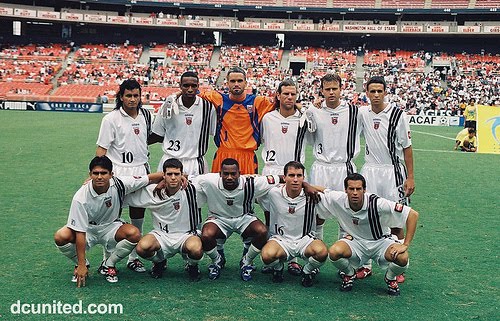
Not only did DC claim the first two MLS Cups, but Arena’s team also piled up a meaningful international title. D.C. United were the first MLS team to win a CONCACAF championship, claiming the 1998 Champions' Cup with a victory over Toluca.
Real Salt Lake are aiming to be the third MLS outfit to win a league championship. While having been the first MLS team to win an international competition, Arena said the challenge facing RSL is unlike what DC went through to win 13 years ago.
“It was great, but [a] different scenario than it is now," he said. "We played a championship format. It was a little different, but Salt Lake has gotten good experience in the group play to be prepared for this. They obviously know what’s at stake.”
The other team to claim a CONCACAF title is Arena’s current team, the LA Galaxy. Like DC, the Galaxy won the 2000 Champions' Cup when it was held over a week-long stretch. Since the tournament morphed into a home-and-away format in 2002, and then a full tournament with a group stage and knockout round in 2008, an MLS team has not reached the final until now.
In 1998, DC played host to the Champions' Cup. In their quarterfinal match, United routed Trinidadian side Joe Public 8-0, then beat Mexican side León, who had previously ousted MLS Cup '97 runners-up Colorado in a qualifying series. After their 2-0 win, DC beat Toluca in the final 1-0 on a goal by Eddie Pope.
After DC and the Galaxy won it two years apart, such a thought may have seemed improbable.
“I don’t think at that point in time anyone kind of understood that we were going to have this type of dry run in the competition,” Arena said. “Now that it’s been such a big gap, I think it will be a great achievement for the league and certainly for Salt Lake.”
RSL will have to do what D.C. United did not have to, as RSL will play in Monterrey in the first leg of the series on Wednesday.
“Having the first game away is never easy," Arena said. "I think it’s easier the other way, when you have the first game at home."
Still, the opportunity for RSL to etch their names among D.C. United and the LA Galaxy in MLS lore exists. Salt Lake will have an advantage heading back to Utah for the second leg, scheduled for April 27, and as long as the series is close after the first leg, there is a chance for a third regional trophy for MLS.
“The good thing they have is they have a little altitude when Monterrey has to come back to Salt Lake," Arena said. "The altitude in Salt Lake is going to be a factor. If they can keep the game even or within a goal, I think they’ll have a chance at home to win.”
Wednesday, April 20, 2011

Subscribe to:
Posts (Atom)